About
Blepharoplasty (Eyelid Surgery)
What is Blepharoplasty?
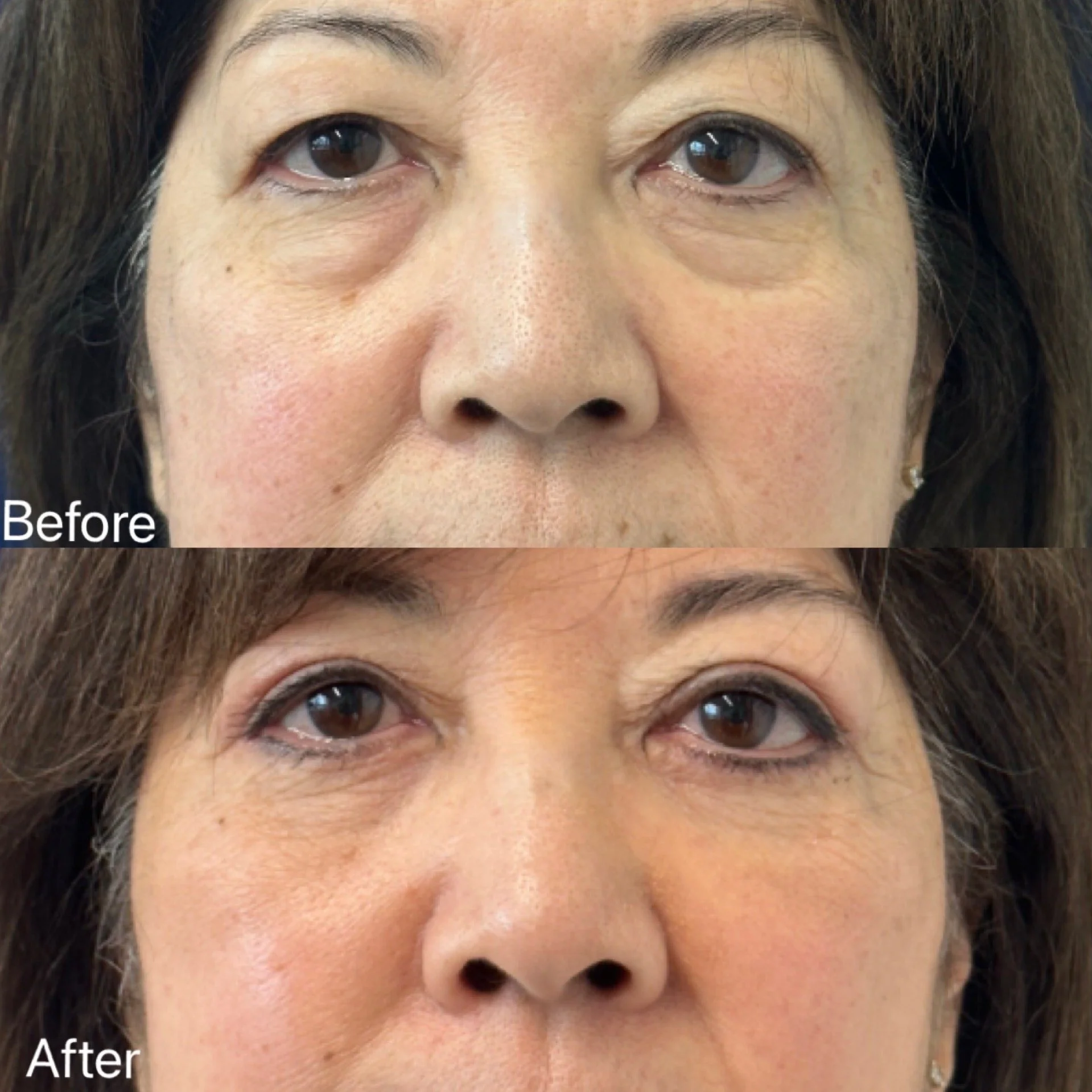
Blepharoplasty is surgery of the eyelids in which excess fat, skin, bags, pouches, and wrinkles in the eye area are removed to make the eyes appear less tired, more open, and more youthful. It is one of the most transformative facial rejuvenation procedures available—the eye area is often the first feature others notice, and changes there dramatically affect how rested and alert a person looks.
The procedure can address the upper eyelids, lower eyelids, or both, depending on each patient's anatomy and concerns.
Upper vs. Lower Blepharoplasty
LOWER BLEPHAROPLASTY
Addresses under-eye bags, puffiness, excess skin, and hollowness beneath the eyes. Fat may be removed, repositioned, or both.
Incisions: Just below the lash line, or entirely inside the eyelid (transconjunctival approach).
Results: Permanent.
UPPER BLEPHAROPLASTY
Removes excess skin and fat from the upper eyelid that causes hooding, heaviness, or a tired appearance. In some cases, excess skin can actually impair vision.
Incisions: Hidden within the natural upper eyelid crease.
Results: Last approximately 10 years.
What Blepharoplasty Can Address
Drooping or hooded upper eyelids that make the eyes look tired or heavy
Excess upper eyelid skin that falls over the lash line
Under-eye bags and puffiness caused by prolapsed fat
Fine wrinkles and crepey skin on the lower eyelid
Hollowing or a "tear trough" deformity beneath the eye
An overall fatigued appearance that does not reflect how the patient feels
The Procedure
Upper blepharoplasty is performed through an incision hidden within the natural crease of the upper eyelid. Excess skin and, when needed, underlying fat is carefully removed or redistributed, and the incision is closed with fine sutures. The resulting scar sits invisibly within the lid crease.
Lower blepharoplasty can be performed through a subciliary incision (just beneath the lower lash line) or a transconjunctival incision (entirely inside the lower eyelid, leaving no external scar at all). Dr. Kieu selects the approach based on each patient's anatomy and the goals for the lower lid.
Both procedures are typically performed under local anesthesia with sedation and can be done together in a single session.
Recovery
Recovery from blepharoplasty is approximately one week. Patients can expect swelling, bruising, and some tightness around the eyes for 7–14 days. Cold compresses and head elevation help manage swelling in the first 48 hours. Most patients are comfortable returning to work and social activities after about one week, though final results continue to refine over 4–6 weeks.
Ideal Candidates
Patients with excess upper eyelid skin causing hooding or heaviness
Those with under-eye bags or puffiness that persist regardless of rest
Adults who look consistently tired or older than they feel
Patients with realistic expectations and good overall eye health
Non-smokers, or those willing to stop smoking before surgery
Often Combined With
Blepharoplasty pairs exceptionally well with a brow lift (to address the brow's contribution to upper eyelid heaviness) and with non-surgical treatments such as undereye filler or Botox for a fully comprehensive periorbital rejuvenation.
Dr. Kieu's Approach
The eye area is the most expressive and scrutinized region of the face, which is why Dr. Kieu approaches every blepharoplasty with particular precision and conservatism. Her goal is to create an eye that appears naturally rested and refreshed—not operated on. She preserves the patient's natural eye shape, avoids over-removing fat, and selects incision approaches that minimize visible scarring for each individual anatomy.