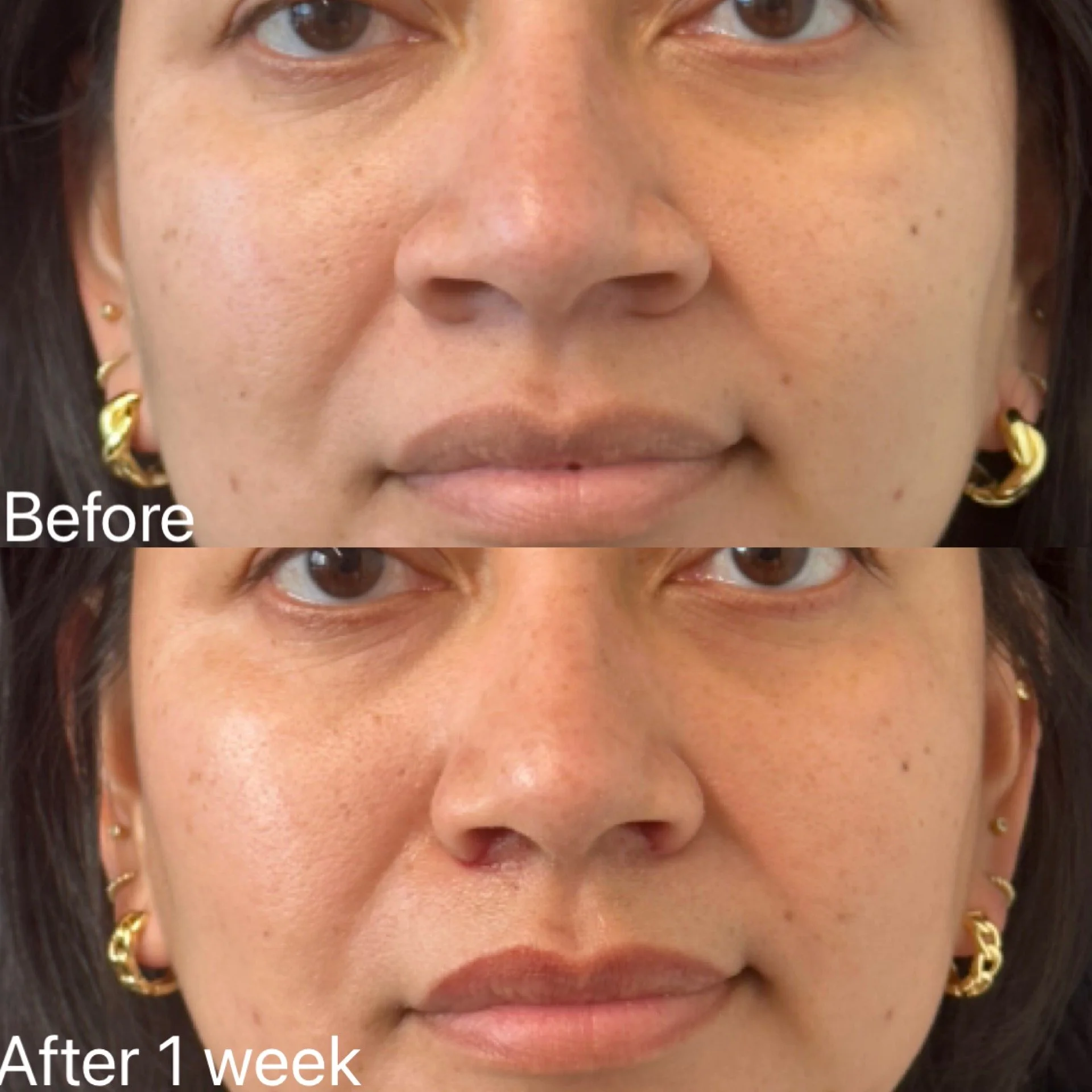
What Is Alarplasty — and Is It Right for You?
Of all the procedures I perform, alarplasty might be the most underappreciated. Patients come in having spent months — sometimes years — bothered by the width or flare of their nostrils, not knowing that there's a precise, low-downtime surgical solution that addresses exactly that concern. They also sometimes come in thinking alarplasty will solve something it can't. So let me be direct about both sides.
What Alarplasty Actually Is
Alarplasty — also called alar base reduction or nostril reshaping — is a surgical procedure that reshapes the alar base: the soft tissue at the bottom of the nose where the nostrils meet the cheeks. By removing small, carefully planned wedges of tissue and suturing the result with precision, we can reduce nostril width, correct nostril flare, improve asymmetry between the two sides, or refine an alar base that is disproportionately wide relative to the rest of the face. What makes alarplasty distinct from rhinoplasty is what it doesn't touch: the bone, cartilage, bridge, and tip of the nose remain completely unaltered. This is a procedure of the soft tissue base only.
The Proportion Principle
When I plan an alarplasty, I'm not thinking about making nostrils smaller in isolation. I'm thinking about proportion — specifically, the relationship between the alar width and the intercanthal distance (the space between the inner corners of the eyes). The classical aesthetic guideline is that the nasal base should approximate the width of the intercanthal distance. But I want to be clear: this is a starting point, not a rule. Every face is different. Ethnic background influences ideal proportions significantly. And the goal is never to erase a person's natural features — it's to bring the nose into better harmony with the face as a whole.
The key principle in alarplasty: restraint. Every millimeter removed changes the result. Overcorrection is difficult to reverse. I would rather be conservative and have a patient thrilled with subtle improvement than aggressive and have a patient looking altered.
Who Is a Good Candidate?
Good alarplasty candidates have one or more of these concerns:
• Nostrils that are wider than they'd like relative to the overall nose and face
• Nostrils that flare significantly with expression or simply at rest
• Nostril asymmetry — one side noticeably wider or differently shaped than the other
• A nasal base that draws attention in a way the patient finds disproportionate
Alarplasty is appropriate for adults whose nasal anatomy has fully developed — typically 16 to 18 years of age. It can be performed as a standalone procedure or, quite commonly, combined with rhinoplasty when a patient is already reshaping the bridge or tip.
What Alarplasty Cannot Do — and Why This Matters
I see patients who come in requesting alarplasty when what they're actually bothered by is the nasal tip, the bridge, or the overall size of the nose. Alarplasty changes the nostril base. It does not change the nasal tip projection, the width of the nasal bones, the dorsal profile, or the length of the nose. If a patient has a concern that falls outside the alar base, alarplasty alone will leave them disappointed — not because it was performed poorly, but because it wasn't the right tool for the job. Part of my role in consultation is helping patients identify what is actually bothering them and matching that concern to the right procedure.
What the Procedure Involves
Alarplasty as a standalone procedure is performed under local anesthesia in an outpatient setting. The procedure typically takes thirty to forty-five minutes. I place incisions within the natural crease where the nostril meets the cheek, remove the planned tissue, and close with fine sutures. When combined with rhinoplasty, alarplasty is performed at the end of the rhinoplasty procedure under the same anesthetic.
Recovery is significantly faster than rhinoplasty. Most swelling resolves within the first week. Sutures are removed at seven to ten days. Most patients are comfortable being seen in public within one to two weeks, and incision lines fade steadily over three to six months.
A Word on Scarring
I want to address this directly, because it's a concern almost every patient raises. Alarplasty does create incisions — and those incisions become scars. I won't minimize that. What I can tell you from experience is that when incisions are placed carefully within the natural alar crease, when the closure is meticulous, and when patients follow scar care protocols (sun protection, silicone scar gel or silicone sheeting if needed), those scars become nearly imperceptible at six to twelve months. In the vast majority of patients, the refinement in proportion is far more visible than any trace of the incision.
The patients who are happiest are the ones who came in with a specific, well-defined concern about their alar width or flare — and walked out with a nose that finally felt in balance with their face. That's what alarplasty, done thoughtfully, can do.